
Where does a new idea truly come from? This week on The Collective, we dove deep into the process of human progress, from “Imitation to Innovation.” I was joined by Chance, Marine Corps veteran Isaac Miller, and Canadian SOF veteran Pat Miller for a two-hour exploration of creativity, mastery, and the courage it takes to build something new. We deconstructed the journey every creator takes—from copying the masters to finding their own unique voice—and explored the tension between dogma, curiosity, and the relentless pursuit of “better.”
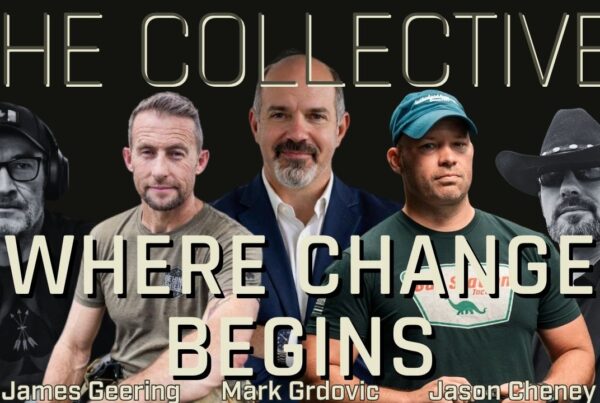
This Week’s Panel:
– Isaac Miller: Marine Corps veteran and AI-focused tech founder, bringing an innovator’s perspective on building from the ground up.
– Pat Miller: Canadian SOF veteran, armourer, and photographer, offering insights on refining craft through experimentation.
Key Insights from Our “Imitation to Innovation” Discussion:
1. Imitation is the Unavoidable First Step
Isaac kicked things off with a fundamental truth: every skill begins with imitation. As children, we learn by mimicking what we see. As apprentices, we learn by copying the masters. This isn’t a sign of weakness; it’s the necessary first stage of any learning process. True innovation can only grow from a solid foundation of imitation.
2. Institutions Often Kill Innovation
A powerful theme was how rigid institutions, from schools to the military, can stifle curiosity. By enforcing a single, dogmatic way of doing things (such as the “EDI” method of instruction), they often teach compliance rather than critical thinking. Isaac noted that the true innovators are often the ones who were considered “bad students” for refusing to stop asking “why.”
3. Novelty is Action
I made the point that a brilliant idea kept in your head for years is not innovation; it’s simply “rumination insanity.” An idea only becomes novel when you have the guts to put it out into the world and see how it fares. The real innovation is not in the thought, but in the courageous act of testing that thought against reality.
4. Innovation Lives in the Nuance
Isaac argued that most modern innovation isn’t about inventing something entirely new, but about finding novel ways to combine existing things. Merging a computer with a suspension system or AI with an enterprise solution—these are acts of innovative blending. The magic happens in seeing the connections that others miss.
5. Competition is the Driver of Progress
Pat emphasized that competition is a primary engine of innovation. Whether it’s Formula 1 racing, military special operations, or athletic contests, these “arenas” and “test beds” create the pressure necessary to push the yardstick forward. Without the drive to compete and win, the motivation to find a better, faster, stronger way diminishes.
6. You Must Be Willing to Let Go of the Past
We discussed the innovator’s dilemma: when to jump ship from a known success to an unproven new idea. We used the example of those who clung to the “manure collection business” when the automobile arrived. Innovation requires a willingness to let go of the past and embrace the discomfort of the new, even when the outcome is uncertain.
7. The Innovator’s Burden
Isaac spoke powerfully about the cost of being an innovator—the ridicule, the ostracism, and the sacrifice required to pursue a vision that no one else sees yet. It requires an immense personal conviction to keep going when the world is telling you you’re crazy.
8. The Human Factor is the Ultimate Variable
Pat made the crucial point that even in hyper-technical fields like Formula 1, where every team innovates at the razor’s edge, the ultimate difference-maker is the human in the seat. Technology, systems, and hardware can be copied or optimized, but the psychology, conviction, and innovative decision-making of the individual under pressure are variables that can’t be replicated. This is the soft truth that hardware alone cannot solve: it’s the person, not just the concept, that drives true performance.
9. Innovation as a Response to Problems and Puzzles
Pat argued that one of the biggest drivers of innovation is the human fascination with solving problems and puzzles. He shared the story of his gunsmith friend who, faced with the problem of cutting rebar during a breach, invented a novel tool. This illustrates that innovation isn’t just a pursuit of “newness” for its own sake; it’s often a direct, creative response to a real-world friction point. The most powerful innovations come from those who are obsessed with solving a specific puzzle.
Final Thought: Innovation is a disciplined act of creation.
It’s not a mystical lightning strike of genius. It is the result of a deep foundation in imitation, a relentless curiosity to ask “why,” the courage to test your ideas in the real world, and the resilience to endure the friction that always accompanies change. It is what happens when you decide to build a better wheel, even when everyone else is happy with the one they have.
What old process can you question this week?
Listen to the full “Imitation to Innovation” discussion here: Imitation To Innovation
Keep building,
Shaun & The Collective Crew